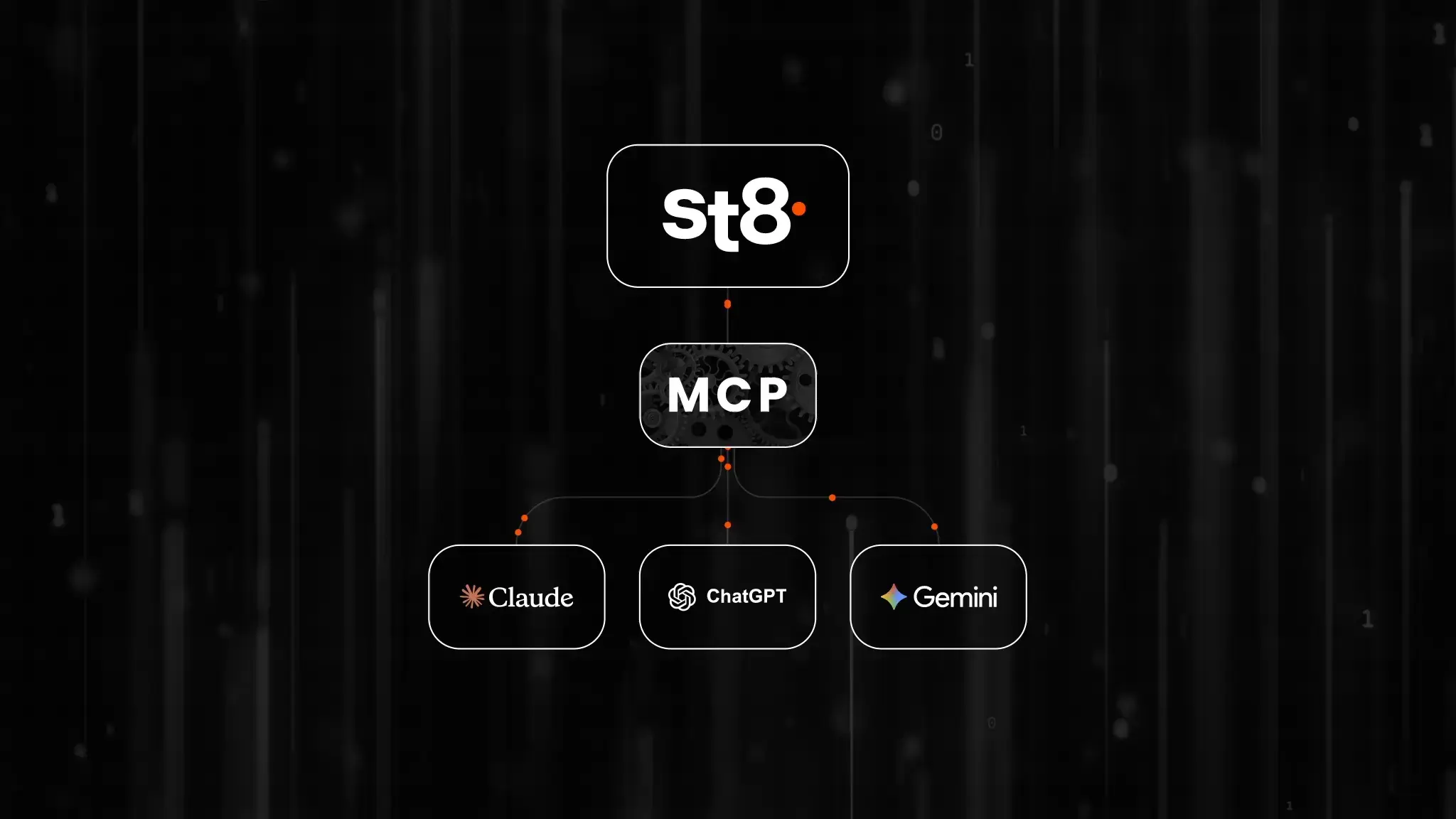
We are delighted to announce the launch of our new Model Context Protocol (MCP), enabling operators to securely access back-office data using AI assistants and large language models (LLMs). By allowing teams to interact with operational data through natural language, we are streamlining workflows and reducing the need to manually navigate multiple back-office systems.
Our MCP enables teams to retrieve reports, summarise data, access game and provider information, analyse promotional performance, review release calendars and perform a wide range of operational tasks through simple natural language queries. Compatible with leading LLMs such as ChatGPT and Gemini, the protocol provides a faster, more intuitive way to interact with operational data while maintaining the robust security framework our platform is built on.
Designed to support both human users and AI-powered workflows, the MCP by St8 can also be integrated with internal AI assistants, analytics platforms, and business systems that require structured access to back-office information. By exposing a curated set of read-only GraphQL operations, we deliver relevant operational context without compromising platform security or data governance.
The protocol follows our established permission hierarchy across companies, operators, and sites, ensuring that users and connected AI tools can only access the information they are authorised to view.
The launch reflects our continued commitment to developing modern infrastructure that helps operators reduce operational complexity while improving operational efficiency. As AI adoption accelerates across the iGaming industry, we believe secure integration between operational platforms and intelligent assistants will become an increasingly important competitive advantage.
Commenting on the launch, Vlad Negine, CEO at St8, said:
"AI is quickly becoming part of everyday business operations, but for it to deliver real value, it needs secure, structured access to the right information. Our MCP bridges that gap by allowing operators to easily interact with their back office while respecting the same permission structure they already rely on. Whether it's retrieving reports, checking game information, or analysing promotions, we're making it significantly faster for teams to access the insights they need. Just as importantly, we're giving operators the flexibility to connect their preferred AI tools, whether that's an LLM or internal assistants, without changing how they manage security or governance."

St8 Team
iGaming Newsroom & Editorial Team
The St8 Team is a collective of passionate iGaming professionals, content strategists, and industry analysts dedicated to delivering the latest news, expert insights, and trends shaping the online gaming world. With years of combined experience in game aggregation, operations, and affiliate marketing, our writers provide clear, data-driven content designed to inform and inspire operators and providers alike. Follow our updates to stay ahead in the ever-evolving iGaming landscape.